

Current Sermon Series Resources
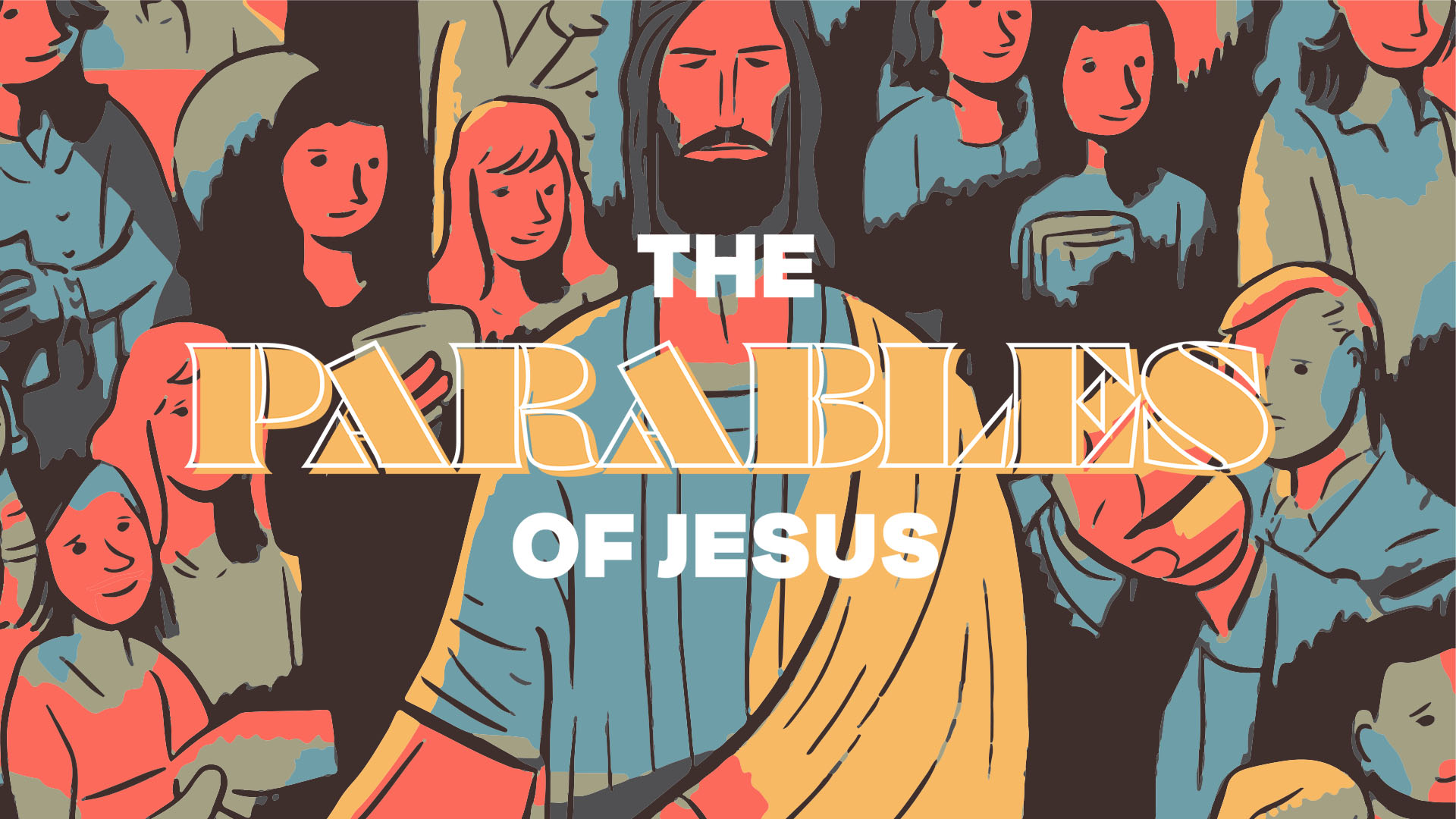
The Parables of Jesus
The audience gathers and is captivated by Jesus’s stories. Some listen but quickly move on, while others hear and are transformed. For centuries, Jesus’s parables have challenged and empowered his followers to understand the Kingdom of God and to submit to the God of the Kingdom. Join us this June and July at The MET as we dive deeper into some of the most profound and life-giving teachings Jesus gave us.
Bible Project
Bible Project: Jesus of Nazareth was a master storyteller, and many of his most well-known teachings were told as parables. But these stories were designed to do much more than simply “teach.” Jesus said the parables were designed to both reveal and conceal his message about the arrival of God’s Kingdom. In this video, we explore the main themes in Jesus’ parables and ask why he used them as the primary vehicle for his message.

Exploring Various Bible Translations: An Introduction
Accessing and exploring various Bible translations can significantly enhance your understanding and study of Scripture. Different translations offer unique perspectives and linguistic nuances, making the Bible’s message more accessible and relatable. While some versions, like the King James Version (KJV), emphasize formal equivalence and literary style, others, such as the New Living Translation (NLT), focus on readability and contemporary language. Comparing translations can reveal deeper insights, clarify difficult passages, and provide a richer, more comprehensive grasp of biblical teachings. This approach helps to bridge cultural and linguistic gaps, ensuring a more profound connection with the timeless truths of the Bible.

Bible Project
Explore how the Bible is a unified story leading to Jesus and offering wisdom for today.

Additional Bible Resources
Here’s what the Blue Letter Bible offers as a Bible study resource
Users can search the Bible by verse, keyword, or topic, using various translations.
Access to many different translations, including the KJV, NASB, NIV, ESV, and more.
Interlinear tools that show the original Hebrew and Greek texts alongside the English translation, with links to lexicons and concordances.
A wide range of commentaries from respected Bible scholars and theologians, providing verse-by-verse explanations and interpretations.
Access to biblical dictionaries and encyclopedias for deeper understanding of terms, places, and concepts in the Bible.
Sermons, lectures, and teachings available in audio and video formats.
Comprehensive concordances to study the occurrence and usage of words throughout the Bible.
Daily devotionals and Bible reading plans to guide personal study.
Tools like word studies, cross-references, and maps to aid in understanding the Bible’s context and message.
Cross Referencing. What is it and why is it important?
Cross-referencing in Bible study is a valuable practice for several reasons:
Cross-referencing allows readers to compare passages that discuss similar themes, concepts, or events. This can provide a more comprehensive understanding of the Bible’s message. For instance, cross-referencing helps in understanding how different parts of the Bible relate to each other, revealing deeper insights and consistent themes throughout the Scriptures (Hendrickson Rose) (Christianbook).
By examining how a particular term, idea, or event is treated in different parts of the Bible, readers gain better context. This helps avoid misinterpretations that might arise from reading a passage in isolation. For example, the New Testament often references Old Testament prophecies to show their fulfillment in the life and work of Jesus (Hendrickson Rose) (VISUAL UNIT).
Cross-referencing supports the validation of biblical truths. When multiple passages reinforce the same point, it underscores the reliability and consistency of the Bible. This is particularly useful in theological studies, where doctrine is built upon the entirety of Scripture rather than isolated verses (Christianbook) (VISUAL UNIT).
For thematic studies, cross-referencing is indispensable. It helps to trace a theme or topic throughout the Bible, providing a fuller picture of what the Bible says about specific issues such as faith, redemption, sin, and salvation. This approach enriches personal study and teaching by connecting various scriptural dots (Hendrickson Rose) (Christianbook).
Cross-referencing enhances devotional reading by showing the interconnectedness of Scripture. It can make personal Bible study more engaging and enriching by revealing the intricate tapestry of God’s word, thus deepening one’s spiritual life and relationship with God (Christianbook).
Overall, cross-referencing is a tool that brings greater depth and breadth to Bible study, fostering a more robust and nuanced understanding of the Scriptures.
What is a Bible Commentary and Why is it important?
A Bible commentary is a scholarly work that provides explanations, interpretations, and contextual insights into the biblical text. These commentaries are usually written by theologians, scholars, and pastors who have extensive knowledge of the languages, history, culture, and theology of the Bible. They aim to help readers understand the deeper meanings and implications of Scripture. Here’s why Bible commentaries are important:
Bible commentaries often provide historical and cultural background information that is crucial for understanding the context of a passage. This can include details about the customs, geographical locations, political situations, and societal norms of the time when the text was written (Christianbook) (VISUAL UNIT).
Commentaries often include explanations of the original languages (Hebrew, Aramaic, and Greek) in which the Bible was written. This can help clarify meanings that might be lost or obscured in translation. Understanding the nuances of the original language can significantly deepen one’s comprehension of the text (Christianbook).
Scholars provide theological insights and interpretations, helping readers understand the doctrinal implications of the text. This can aid in forming a coherent theology and understanding how various parts of the Bible contribute to broader theological concepts (VISUAL UNIT).
Many commentaries include practical applications, showing how the teachings of the Bible can be applied to modern life. This helps readers not only to understand the text intellectually but also to live out its principles in daily life (Christianbook).
Some parts of the Bible are difficult to understand due to their complex language, symbolism, or challenging concepts. Commentaries can help unravel these complexities, providing clear explanations and various scholarly interpretations to help make sense of difficult passages (VISUAL UNIT).
Commentaries often compare different interpretations and viewpoints, helping readers see a range of scholarly opinions. This comparative approach can lead to a more nuanced understanding and allows readers to form their own informed interpretations (Christianbook).
Using a commentary can significantly enhance personal and group Bible study by providing deeper insights and provoking thoughtful discussion. It equips readers with a more profound understanding, making their study more enriching and comprehensive (VISUAL UNIT).
In summary, Bible commentaries are important tools that provide valuable insights into the text, helping readers understand the Bible more deeply and apply its teachings more effectively. They bridge the gap between ancient texts and contemporary readers, making the Bible’s timeless message accessible and relevant.
Literal Word (NASB) Bible Study Resources
Users can search for specific verses, phrases, or keywords across the NASB text.
Side-by-side comparisons of verses in different translations.
Tools to highlight, annotate, and bookmark passages for deeper study.
Links to related verses throughout the Bible, enhancing contextual understanding.
Access to original Greek and Hebrew words with definitions and occurrences.