Do you ever feel like something needs to change, but you're not sure where to begin?
Maybe you're facing something that feels bigger than you. You're carrying stress, anxiety, hurt, or disappointment, wondering when things will get better. Or maybe life looks fine on the outside, but deep down, you're longing for something more. More peace. More joy. A fresh start.
Whatever you're facing, you don't have to face it alone.

Devotional Guide
Continue the conversation beyond Sunday with this guided devotional for the Breakthrough series.
Each weekday, you’ll find Scripture, reflection, prayer, and practical next steps designed to help you grow in your faith and apply what you’re learning. Simply open the devotional each day and follow along.
Seeking God's Presence. Expecting God's Power.
Breakthrough is a season where we intentionally set aside comforts and distractions so that we can seek God with greater focus, greater hunger, and greater expectancy.
Throughout Scripture, whenever God’s people faced impossible situations, overwhelming battles, deep burdens, or a desperate need for God’s intervention, they often responded with prayer and fasting.
When King Jehoshaphat found himself facing an enemy he could not defeat, he proclaimed a fast and gathered God’s people to seek the Lord. When Esther faced the possibility of destruction, she called for a fast. When Daniel sought understanding and breakthrough, he fasted and prayed. Before Jesus launched His earthly ministry, He entered the wilderness and fasted for forty days.
Again and again, we see the same pattern:
God’s people seek God’s face, and God moves in powerful ways.
As we enter this church-wide journey called Breakthrough, we are inviting every person at The MET Church into a season of prayer, worship, and fasting. The goal is not simply to practice spiritual disciplines. The goal is to seek God with greater focus, greater hunger, greater expectancy, and greater dependence.
We believe that breakthroughs happen when God’s people pursue God’s presence.
This season is about asking God to do what only God can do.
- Breakthrough in our homes.
- Breakthrough in our marriages.
- Breakthrough in our children.
- Breakthrough over anxiety and fear.
- Breakthrough from persistent sins and strongholds.
- Breakthrough in evangelism.
- Breakthrough in our church.
- Breakthrough for the advancement of the Gospel.
Most importantly, we are seeking the greatest breakthrough of all: a deeper experience of God’s presence.
Through prayer, fasting, and worship, we are asking God to deepen our intimacy with Him, strengthen our faith, empower us for His mission, and bring spiritual breakthroughs that only He can provide.
We are seeking God’s face before we seek God’s hand.
We are pursuing His presence before we pursue His blessings.
And we are believing that the God who does the impossible still responds when His people seek Him.
Before we talk about what fasting is, it is important to understand what fasting is not.
Fasting Is Not Spiritual Performance
Prayer and fasting are not ways of proving how spiritual we are.
Jesus warned against using spiritual practices to gain attention or impress others. Prayer and fasting are not competitions. God is not comparing our sacrifice to someone else’s sacrifice.
This season is not about impressing people.
It is about pursuing God.
God is not looking for a performance. He is looking for surrendered hearts.
Fasting Is Not Earning God’s Favor
Prayer and fasting do not make God love us more.
We are already accepted through Christ.
We are already forgiven through Christ.
We are already welcomed into the Father’s presence through Christ.
We do not fast so God will accept us.
We fast because God has already invited us close.
Fasting is not striving for God’s affection. It is responding to God’s invitation.
Fasting Is Not a Formula
Prayer and fasting are not magic.
There is no biblical formula that guarantees God will answer every request exactly the way we desire.
The purpose of fasting is not to manipulate God.
The purpose of fasting is to draw near to God.
Sometimes God changes our circumstances.
Sometimes God changes us.
But every time we sincerely seek Him, He meets us in the process.
We do not fast to get more from God. We fast to get more of God.
1. Hunger for God
Fasting is intentionally setting aside something we desire in order to express a greater desire for God.
When we fast, we are declaring:
“God, I want Your presence more than my comforts.”
Every hunger pang becomes a reminder to pray.
Every sacrifice becomes a declaration of dependence.
Every moment of weakness becomes an opportunity to seek Him.
Physical hunger becomes a pathway to spiritual hunger.
2. Focus on God
Life is noisy.
Our schedules are crowded.
Our attention is divided.
Fasting helps eliminate distractions so we can focus more fully on seeking God.
This is why prayer and fasting have often accompanied seasons of revival, renewal, and spiritual awakening throughout Scripture.
Fasting is not about what we are giving up. It is about Who we are making room for.
3. Spiritual Preparation
Before major moments of ministry, testing, or Kingdom advancement, God’s people often entered seasons of fasting.
Jesus fasted before beginning His ministry.
Daniel fasted while seeking wisdom from God.
The early church fasted before launching mission efforts.
Fasting prepares our hearts to hear God’s voice and align ourselves with His purposes.
God often prepares His people before He positions His people.
4. Spiritual Warfare
Many of the battles God’s people face are not merely physical, emotional, or circumstantial.
Scripture reminds us that we live in the midst of a spiritual battle.
Prayer and fasting are powerful expressions of dependence upon God in those battles.
When we pray and fast, we are acknowledging:
“God, this battle is bigger than me, but it is not bigger than You.”
Prayer and fasting remind us that our confidence is not in our strength but in God’s power.
Some battles are not won by trying harder. They are won by seeking God more deeply.
5. Holy Desperation
Throughout Scripture, fasting often appears in moments when people desperately needed God to act.
Esther called for a fast before approaching the king.
Jehoshaphat called for a fast when an overwhelming army was approaching.
Daniel fasted while seeking divine intervention.
These were moments when God’s people realized:
“If God does not move, we have no answer.”
There is something powerful about coming to God with humble dependence and desperate faith.
Desperation is not weakness. It is often the birthplace of breakthrough.
If you’ve never practiced fasting before, an easy way into the practice is to engage in a partial fast. A partial fast can involve avoiding certain foods and drinks, or certain habits. Here are some possibilities for a partial fast:
- Fasting from foods associated with “feasting”: chocolate, sugar, desserts, coffee/caffeine, alcohol, etc.
- Fasting from media or entertainment: cell phone, TV, streaming video, radio, music, email, computers, video games, etc.
- Fasting from habits and comforts: shopping, makeup, elevators, parking in a spot close to the store, finding the shortest checkout line, following sports, etc.
Here are some questions to help you discern a partial fast that will be challenging enough to be fruitful:
- What cravings have a hold on me to the degree that I would have a hard time avoiding them?
- What would be truly liberating to leave behind? Is there a practice in my life that I continually engage in, but I would really love to be free from it once and for all?
- Short of an addiction, have I become overly dependent on a particular food, drink, substance, or activity?
- What would be truly challenging for me to give up during Lent?
- What is Jesus asking of me?
As you pray through these questions, try picking something to give up, establish a firm commitment (involving timelines, amounts, etc.) and then share this with a loved one as a way to embrace accountability. Just remember the principle about fasting that is true about many things in life: “The more you put into it, the more you get out of it!”
Considering a Whole Fast?
A whole fast is not abstaining from food for the entire timeframe, but rather the practice of skipping entire meals (and snacks) for a specific amount of time. During a whole fast, you can continue to drink water or some other non-substantial liquid.
Small children, the elderly, pregnant or nursing mothers, and those with relevant health issues should be very careful in attempting a whole fast. If you’re concerned about fasting, talk with a medical professional about it before trying it.
If you decide to try a whole fast during this dedicated timeframe, consider starting with a 24-hour fast once a week. Traditionally, a 24 hour fast starts the night before by skipping dinner, then skipping breakfast and lunch and then having dinner that night.
Your body can grow in it’s tolerance to fasting. If you would like to do a whole fast for multiple days in a row, first consider maybe building up to multiple days by increasing the amount of days each time you fast after breaks.
Recommended Books

The Circle Maker by Mark Batterson
Theme: Bold, persistent prayer
This is the perfect companion resource for the series. Batterson challenges believers to pray big prayers, trust God’s promises, and persevere in prayer even when answers seem delayed.
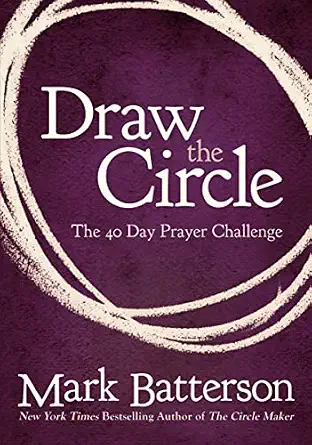
Draw the Circle by Mark Batterson
Theme: 40-day prayer devotional
A practical devotional companion to The Circle Maker. Each reading helps believers develop consistency and faith in prayer.
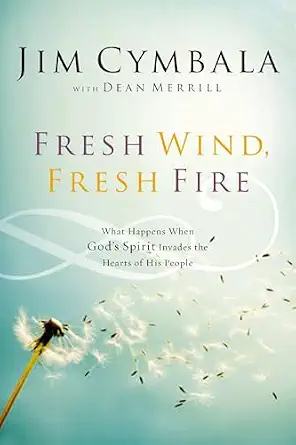
Fresh Wind, Fresh Fire by Jim Cymbala
Theme: The power of prayer and God’s presence in the church
Cymbala tells the story of how prayer transformed the Brooklyn Tabernacle and became the catalyst for spiritual awakening and ministry effectiveness.
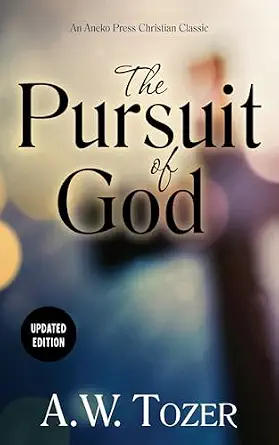
The Pursuit of God by A.W. Tozer
Theme: Seeking God’s presence
A classic work calling believers beyond religious activity into a deeper experience of intimacy with God.
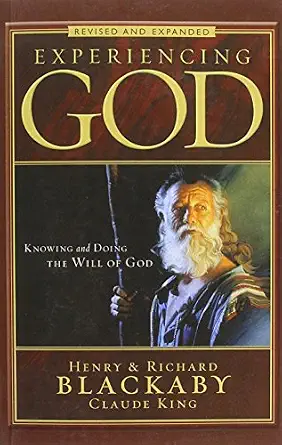
Experiencing God by Henry Blackaby & Richard Blackaby
Theme: Recognizing and joining God’s activity
This book teaches believers how to discern where God is working and how to cooperate with Him rather than pursuing their own plans.
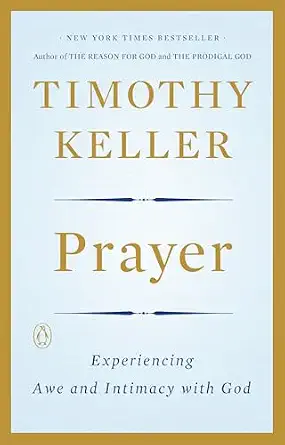
Prayer: Experiencing Awe and Intimacy with God by Timothy Keller
Theme: Developing a vibrant prayer life
One of the best modern books on the theology and practice of prayer. Keller addresses both the heart and habits of effective prayer.

Fervent by Priscilla Shirer
Theme: Strategic prayer and spiritual warfare
This practical guide helps believers identify spiritual battles and develop intentional prayer strategies.
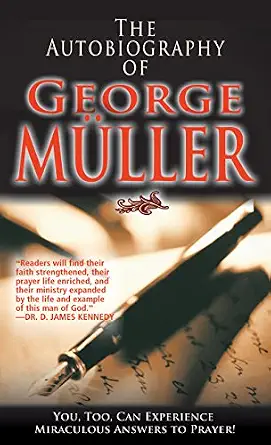
The Autobiography of George Müller
Theme: Faith-filled prayer
Müller’s remarkable story demonstrates trusting God through persistent prayer and dependence on His provision.